
What Is an E-Export Invoice? Take Your Business Digital in Global Markets
{{ post.desc }}

E-export has become one of the fastest routes into global markets. The e-export invoice is one of the most important documents in that process: it speeds things up, brings tax advantages and meets your legal obligations.
What is an e-export invoice?
It is the electronic form of the goods export invoice attached to the customs exit declaration. If you are an e-invoice taxpayer selling physical products abroad, you must issue an e-export invoice. For services or digital products, an e-archive invoice is issued instead.
- Physical product sale → e-export invoice (attached to the customs declaration)
- Digital product or service sale → e-archive invoice
Benefits
- It speeds up invoicing and payment
- It minimises errors in documents
- It removes paper, printing and archiving costs
- It works with your other e-transformation processes
- It makes customs procedures faster and easier
- It records sales, creating financial and legal assurance
What is a micro-export invoice?
This covers overseas sales below €15,000 and 300 kg. SMBs and e-commerce businesses in this bracket gain a tax advantage by VAT-free sales , and customs clearance is handled quickly through the electronic commerce customs declaration.
How do you issue an export invoice?
- Become an e-invoice taxpayer.
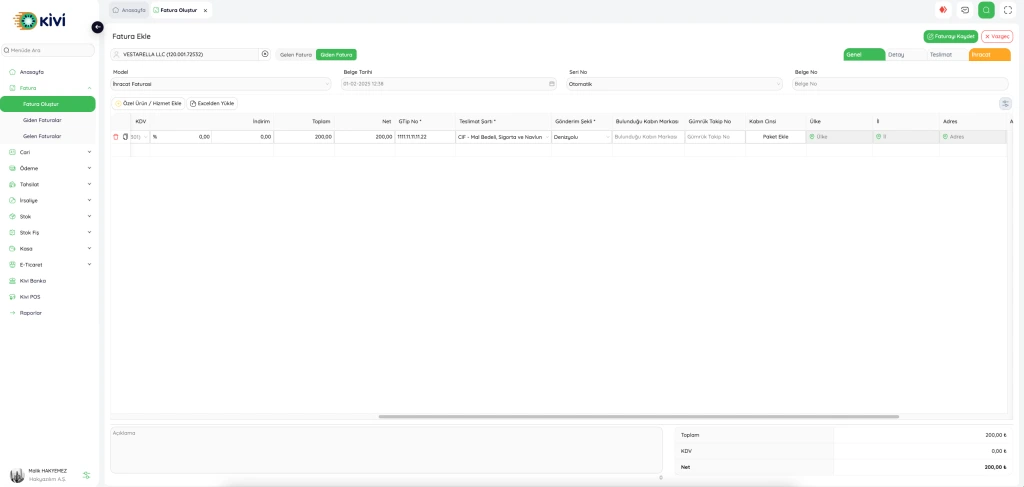
- Use a reliable e-transformation solution: issue it from mobile or web with Kivi.
- Enter the product details in full: description, price, buyer and currency.
- Attach it to the customs exit declaration; it becomes official once filed.
- Store it digitally: export invoices must be kept for 10 years.
Bookkeeping and the export invoice
An export invoice is posted without VAT, exchange differences are taken into account and revenue is recorded in foreign currency. Kivi handles these steps automatically, integrated with your books.
Issue your e-export invoices quickly, securely and compliantly on Kivi’s infrastructure, and take your business into global markets.