
AML Compliance Guide for Jewellers: Safe with Kivi
{{ post.desc }}


The jewellery trade is one of the oldest sectors in the Turkish economy. But high-volume cash transactions, foreign-currency trade and the circulation of precious metals leave it more exposed to money laundering risk. For that reason the AML authority imposes serious obligations on jewellery businesses. Compliance is not only about following the rules: it raises your credibility, helps your relationships with banks and strengthens customer trust.
What is the AML authority and why does it matter for jewellers?
The Financial Crimes Investigation Board is a financial intelligence and supervisory body under the Ministry of Treasury and Finance, fighting money laundering and the financing of terrorism. Dealers in precious metals and jewellers are treated as “obliged parties” under AML legislation.
AML obligations for jewellers
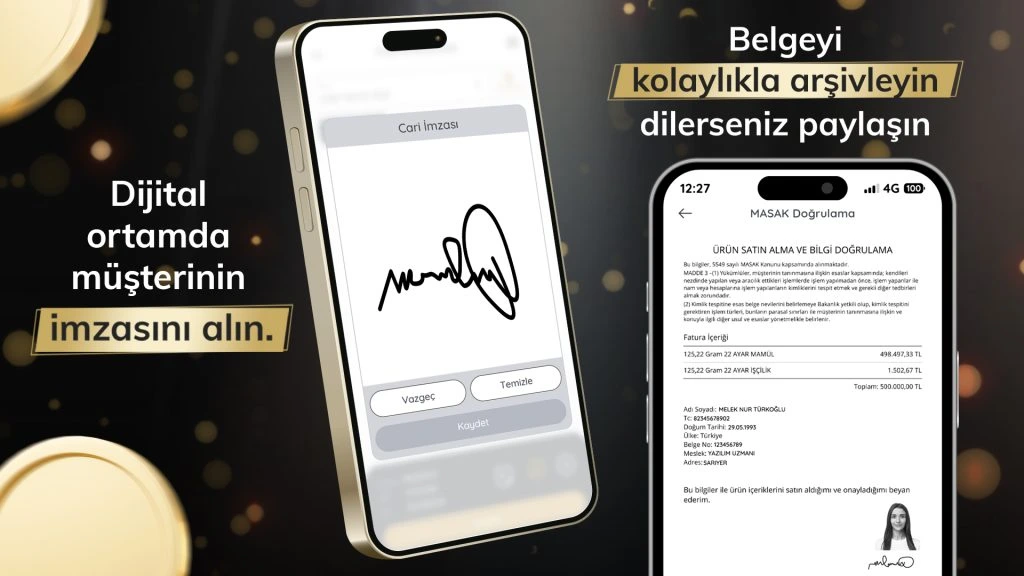
1. Identity verification (KYC): Required when establishing an ongoing business relationship, or for any single transaction of ₺185,000 or more. Identity, address and signature are recorded, and the documents are verified against public systems.

2. Suspicious transaction reporting: Situations such as an unclear source of funds, high-volume cash or a refusal to provide identity details must be reported regardless of amount.
3. Identifying the beneficial owner: For corporate customers, shareholdings above 25% and those with effective control must be identified.
4. Record keeping: All identity details, transaction records and documents must be kept for at least 8 years .
5. Compliance officer and internal audit: Jewellers above a certain size need a compliance officer, training and internal audit procedures.
Digitise your AML processes with Kivi
The Kivi Jewelry SuperApp includes dedicated modules built around AML obligations: identity verification and recording, suspicious transaction detection, beneficial owner lookup and monitoring, automatic archiving, compliance reports and audit support. It does more than keep records — it spots risk early, alerts your staff and keeps your business away from penalty exposure.
The penalties for non-compliance
Failing to meet the obligations can lead to heavy fines, suspension of activity and reputational damage. Using AML-compliant software is a legal requirement — and just as essential for a sustainable business.
Digitisation and compliance reinforce each other. With Kivi you simplify your processes and stay ready for AML regulation at the same time.